

Nigerian creates business exporting avocados and chillies from Rwanda to European supermarkets

Seun Rasheed
Interview with Seun Rasheed
FOUNDER AND CEO, SOUK FARMS
Lives in: Kigali, Rwanda
Nigerian-born Seun Rasheed was working for oil giant Shell in Qatar when a holiday to Rwanda set him on a different path. During the trip, the wide gap between the local price of passion fruit and what it sold for in Europe caught his attention. He realised there was an opportunity to build an export business around that price gap.
Seven years later, SOUK Farms supplies Rwandan-grown produce – including avocados, chillies and beans – to supermarkets in Europe and the Middle East. How we made it in Africa editor-in-chief Jaco Maritz spoke to Rasheed about his entrepreneurial journey and the lessons he has learnt along the way.
Topics discussed during the interview include:
- How easy it is to start an agricultural export business in Africa
- Farming challenges: is Clarkson’s Farm accurate?
- How long SOUK Farms took to become profitable
- Why Rasheed chose Rwanda over Nigeria
- His key entrepreneurship lessons
Watch the full interview below: (only available on How we made it in Africa)
Interview highlights
Nigeria-born Seun Rasheed comes from a family of entrepreneurs. His father established a fishing business, while his mother ran a fish retail venture.
Rasheed moved to the UK in his early teens to continue his education. He began his career at oil and gas company Shell, where he spent more than a decade working in various parts of the world.
The inspiration for SOUK Farms came during a holiday to Rwanda in April 2019. At breakfast in his hotel, Rasheed ordered a juice and was surprised to receive fresh passion fruit, given the fruit’s high cost in markets such as Europe. When it was served again at dinner, his curiosity was piqued.
“I was thinking passion fruit must clearly be super cheap in Rwanda. What was meant to be a holiday quickly turned into a market research trip for me,” he recalls. “So that’s actually where the initial idea for an export business started.”
After several further trips to Rwanda to assess the potential for exporting agricultural produce, Rasheed registered SOUK Farms in July 2019.
Getting the business off the ground
SOUK Farms made its first export in August 2019, shipping a mix of passion fruit, avocados and chillies to the Middle East. At first, the company did not grow its own crops, relying instead on contracted smallholder farmers, known as outgrowers, to supply the produce.
From that first shipment, Rasheed began building a broader base of wholesale customers in the UK, Europe and the Middle East. During those early months, he spent a lot of time visiting prospective buyers in these markets. “It’s really about almost pestering your clients until they say, ‘Yes, let me give you a try’,” he explains.
Initially, Rasheed continued with his day job at Shell, working in Qatar at the time. “I had my 9-5 with Shell, then I had my 7-10 pm with SOUK,” he says. A team on the ground in Rwanda coordinated the company’s operations.
As SOUK Farms expanded, managing its operations remotely became increasingly difficult. Revenue rose from $78,000 in the first year to $1.2 million the next. In 2021, Rasheed left Shell to devote himself to the company full-time.
The company’s progress gave Rasheed the confidence to make the move. “It was easier to make that transition because the business was trending in the right [direction] … at least I could see where the business was going,” he says. “I don’t think I would have left Shell to completely start a business from scratch.”
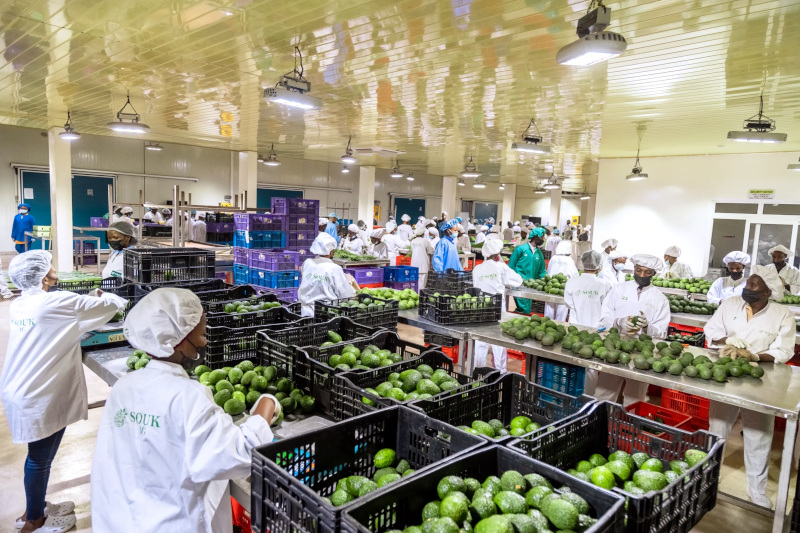
SOUK Farms’ products include avocados, chillies and beans.
Building a farming operation
SOUK Farms initially sourced all its produce from outgrowers. But as the company expanded, Rasheed became concerned about the risks of depending entirely on them. The company therefore began developing its own farms. This proved far harder than expected. The farming operation recorded losses during its first few years, which Rasheed attributes partly to difficulties finding the right people to lead it.
His own limited involvement was another problem. Rasheed describes his early approach as “telephone farming”: he managed the operation from a distance and visited the farms only once every week or two.
“I really needed to dig deep to figure out how we could make our farming operation work,” he says. Rasheed then spent about two years closely involved in the day-to-day running of the farms, deepening his understanding before gradually stepping back.
SOUK Farms now has 250 hectares of land across four farms in Rwanda. About half of its produce comes from these farms, with the remainder supplied by a network of roughly 2,000 smallholder farmers.
Adding value
Over the years, SOUK Farms has broadened the range of crops it exports. The company focuses on non-traditional produce, which Rasheed describes as “exotics”. Its products include several varieties of chillies and avocados, along with passion fruit, French beans, sugar snaps, snow peas and Tenderstem broccoli, among others.
Most of the company’s produce is still exported fresh. Rasheed sees value-added products as an important avenue for future growth, particularly for grade-two crops that are not suitable for export.
Avocados are one example. Rather than leaving grade-two fruit unsold, SOUK Farms could process it into avocado oil. Rasheed hopes to begin pursuing this opportunity next year.
He adds that value addition does not necessarily require extensive processing. It could also involve preparing mixed vegetable packs for stir-fries or selling frozen vegetables.
Money matters
Friends and family funded SOUK Farms in its early years. In 2023, Dutch impact investor Goodwell Investments provided additional capital. The company became profitable in 2025.
Rasheed describes the business as highly cash-intensive, both in terms of infrastructure and working capital. Customers typically pay between 30 and 90 days after receiving their orders, but most of the company’s expenses must be settled much sooner.
“You can’t tell a smallholder farmer, ‘Wait for 30 days before you get paid,’” he says. Farmers generally expect payment the day after their produce is collected. Airlines typically require payment upfront or within seven days, while packaging suppliers are paid in advance and farm workers at the end of each week.
This leaves SOUK Farms carrying most of its costs well before the corresponding revenue arrives.
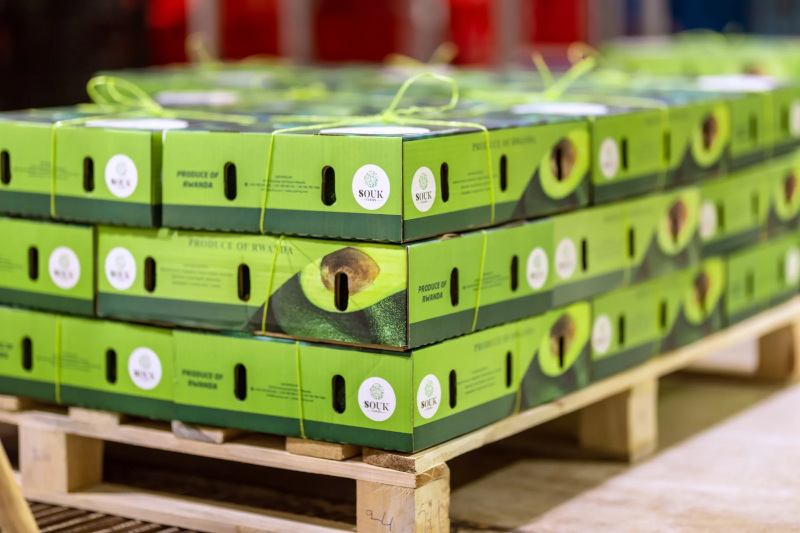
The company’s main export markets are Europe and the Middle East.
The trade-off between wholesale and retail
Of Rwanda’s 10 largest agricultural exporters when SOUK Farms was founded in 2019, only four are still operating, according to Rasheed – evidence of how difficult the industry can be.
Wholesaling has relatively low barriers to entry. “You can start exporting to the Middle East today without any major certifications, as an example,” he says.
However, exporters often have limited power in the wholesale market. A buyer may reject a shipment on quality grounds and refuse payment, while sudden price declines can force suppliers to accept less than the agreed amount.
“When wholesale prices crash, your client will come back to you and say, ‘Sorry, I can’t pay the agreed price … I can only pay this much – take it or leave it,’” Rasheed explains. “That’s why you see a huge turnover of exporters because all it takes is to lose out on one big shipment and your business is bankrupt.”
Although SOUK Farms began by selling through wholesalers, the goal was always to supply retailers abroad directly. The vast majority of its sales now go to supermarket chains in Europe and the Middle East, including Morrisons and Co-op in the UK and Edeka in Germany.
Retailers offer better margins and are more predictable counterparties. Securing them as customers, however, takes considerably longer and comes with more demanding requirements. Rasheed puts the timeframe at “about two to three years between initial contact with the retailer to actually getting your product on the shelves”.
Part of the reason is that retailers conduct more extensive compliance checks and verification than wholesalers. Suppliers must also obtain numerous certifications, which are expensive to maintain. Rasheed says SOUK Farms spends more than $50,000 a year on certifications.
Building the right team
SOUK Farms employs around 750 people, of whom about 80 are skilled workers.
One of Rasheed’s biggest early mistakes was hiring according to a fixed budget, rather than paying what was necessary to secure the right person. “Very quickly, you find that that’s the worst investment you’ve made,” he says. The company is now more prepared to offer strong candidates the salaries they expect.
He also advises hiring slow but firing fast. “A not-so-great employee will lose you a lot of money.”
When hiring, SOUK Farms places less emphasis on experience and more on personality. “You can train the right people with the right personality,” Rasheed says.
He adds that each team member should be managed according to their personality. While some want to be micromanaged, others want to be left alone.
“As parents, you don’t say, ‘I’m going to treat all my children exactly the same way.’ There are certain things you tweak for each of your kids. Same thing with your team members also,” he explains. “I really try to adapt to how they would like to be led because that’s the way I can get the best out of them.”
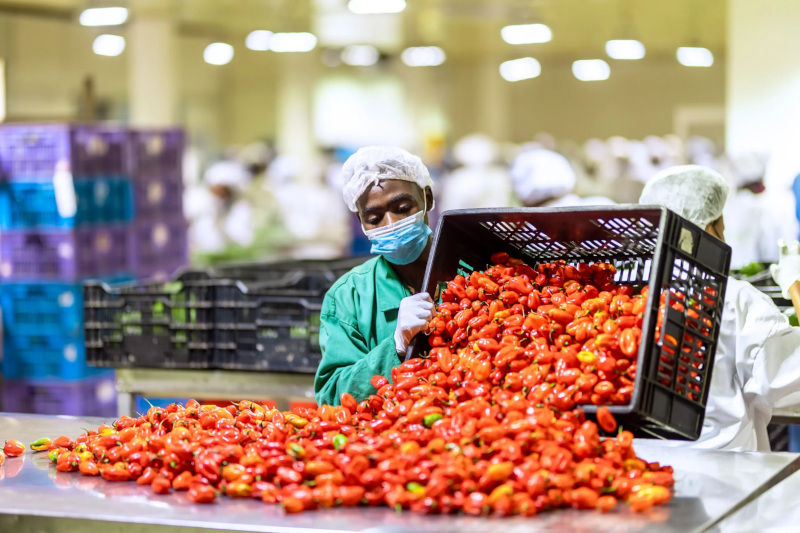
About half of SOUK Farms’ produce comes from its own farms, the rest from roughly 2,000 smallholder farmers.
Don’t scale too quickly
One of Rasheed’s key business lessons is to scale gradually. Entrepreneurs, he says, often pursue rapid growth before their businesses have a solid foundation.
“If you move too fast whilst not having a solid foundation, you’ll find that those recurring problems … stay with you, but now they’re really sort of exaggerated because you scaled too quickly,” he explains.
Scaling gradually does not mean moving slowly, he adds. “It just means you’re ready for the next level.”
He compares the process to moving through school one grade at a time. Even a talented student would struggle if moved directly from grade one to grade five. Progressing through each stage, he argues, provides the preparation needed to perform well at the next level.
Advice for young people
Rasheed advises young people to remain curious and willing to learn. “A lot of the younger team members that I see progress very quickly within SOUK are folks that are very curious. They’re very, very keen on understanding how things work. Because the more they do that, the more they see gaps, which gives them opportunities to actually shine,” he says. “So I think the advice I’ll give is just be curious, be keen to learn, and through that all the opportunities will come.”