The new face of African entrepreneurship
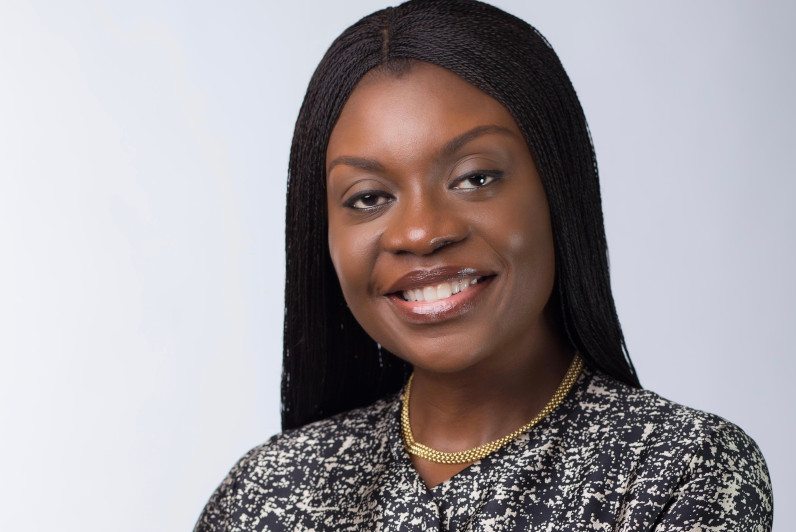
Dr Anino Emuwa
PARTNER CONTENT: Africa’s Business Heroes
By Dr Anino Emuwa
Over the past six years as a judge for Africa’s Business Heroes (ABH), I have witnessed first-hand one of the most important shifts taking place across the continent: the evolution of African entrepreneurship itself.
The change is not simply in the number of founders emerging across Africa, although that has grown significantly. What is striking is the shift in mindset, ambition, and execution. Today’s entrepreneurs are building differently. They are solving deeply rooted challenges with greater sophistication, thinking about scale earlier, and increasingly creating businesses with both local relevance and global potential.
Across cities such as Lagos, Nairobi, Kigali, Accra, Cairo, and Cape Town, entrepreneurs are not waiting for perfect conditions. They are building in spite of them.
Some of the strongest signals of progress are already visible. Payments and fintech stand out as one of Africa’s great success stories, expanding financial inclusion at scale, enabling digital commerce, and demonstrating that world-class infrastructure innovation can emerge from the continent. Alongside this, agritech is connecting farmers to markets and data, renewable energy solutions are improving access and affordability, and logistics and mobility startups are addressing fragmented supply chains. The creative industries are also rising fast, from film and music to fashion and hospitality, showing how African talent is increasingly shaping both local economies and global culture.
Africa’s growth outlook also remains strong, with many economies projected to continue outpacing global averages. That momentum is increasingly reflected in entrepreneurial activity across the continent. Africa’s startup ecosystems are gaining global visibility. 10 of its countries are listed in the Global Startup Ecosystems top 100 and only the larger economies such as South Africa, Egypt, Nigeria and Morocco, but also in emerging innovation hubs including Rwanda, Mauritius and Cape Verde.
Africa’s growth story is driven by multiple forces, including commodities, services, demographics, and public investment. But entrepreneurship is becoming an increasingly important part of that mix. It is helping diversify economies, improve productivity, and create jobs and opportunities.
This is where Africa’s Business Heroes plays a meaningful role. ABH provides funding, visibility, human capital development, and access to networks that are often out of reach.
Over the years, a few patterns have consistently stood out to me.
First, the strongest founders are deeply rooted in the problems they are solving. They understand their markets from the inside out, including informal systems, competitive realities, infrastructure gaps, regulatory complexity, and fragmented demand. This often creates solutions that are not only locally relevant, but highly resilient.
Second, execution has become just as important as vision. The founders who stand out can clearly explain how their business works in practice: how they acquire customers, generate revenue, and create a path toward growth. It is no longer enough to have a compelling idea. The route to execution must be credible and well understood.
Third, technology, particularly AI, is increasingly being used as an enabler rather than simply a trend. The most effective founders apply it where it removes bottlenecks, expands access, or drives efficiency in sectors such as healthcare, agriculture, logistics, and financial services.
Perhaps most importantly, clarity has become a defining characteristic of strong founders. The best pitches are not simply the most polished; they are often the clearest. Founders who truly understand their businesses can explain them simply, without relying on complexity or buzzwords. That clarity builds trust.
One lesson has become increasingly clear over time: many early-stage ventures do not struggle because the idea is weak. They struggle because the path from idea to execution is not sufficiently clear, particularly around distribution, unit economics, and scaling beyond initial traction.
That is why ABH is much more than a competition. It is an ecosystem platform that surfaces entrepreneurs who might otherwise remain invisible, connects founders across fragmented markets, and gives them exposure to a broader community of investors, operators, and peers.
This year, we have received 24,000 applications from all 54 African countries, and I am also delighted to note that female participation is at its highest at 45%. Notably, four of the Grand Prize winners to date have been women. This is an encouraging signal, not only of progress in representation, but also of the growing strength and competitiveness of female entrepreneurs across the continent.
After six years, I remain genuinely optimistic. The challenges are real, but so is the quality of entrepreneurial talent, and it continues to strengthen every year.
What is emerging across Africa is not simply a startup ecosystem. It is a generation of builders turning constraints into creativity and ideas into scalable businesses that contribute to the continent’s social and economic development.
And that shift is only just beginning.
This year’s ABH Top 100 have now been announced – a new generation of founders building bold, practical, and scalable solutions across the continent.
Learn more about the 2026 ABH Top 100 here.
Dr Anino Emuwa is a strategic advisor to boards and CEOs on navigating complex change, with a focus on AI governance, geoeconomics, and future-proofing leadership teams. She is the Managing Director of Avandis Consulting, and Founder of Africa Women CEOs Network. Dr Emuwa has served as an ABH Judge since 2020.