Doing business in Somalia: unpacking the realities on the ground
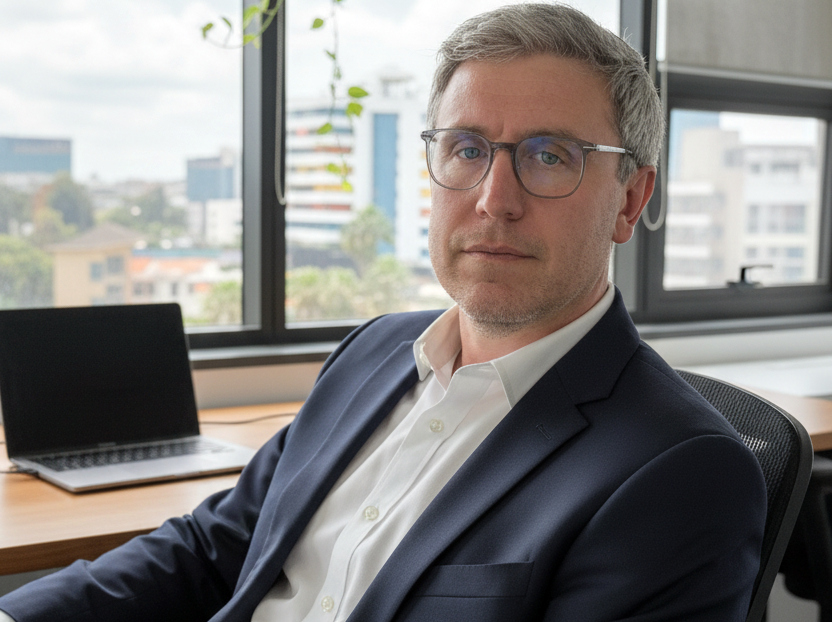
Jon Bellish
Interview with Jon Bellish
EXECUTIVE DIRECTOR, SHURAAKO CAPITAL
For many people, Somalia is synonymous with war, insecurity and political instability, rather than a destination for business. Yet despite challenges in parts of the region, local commercial activity continues across a variety of sectors, ranging from renewable energy and water bottling to apartment construction and poultry production.
Jon Bellish is the executive director of Shuraako Capital, a firm that provides financing to Somali companies. How we made it in Africa editor-in-chief Jaco Maritz spoke to Bellish about the operating environment and some of the region’s untapped business opportunities.
Topics discussed during the interview include:
- Can I safely travel to Mogadishu?
- Business opportunities in Somalia
- Why two site visits a day is an achievement in Mogadishu
- Companies funded by Shuraako Capital
- How Bellish began investing in Somali businesses
Watch the full interview below: (only available on How we made it in Africa)
Interview highlights
Somalia’s modern political history is rooted in the 1991 collapse of former president Siad Barre’s government, which ushered in years of civil war. Although a federal government was established in 2012, its authority is frequently contested by regional administrations, clan-based power structures, and armed groups. The Islamist militant group al-Shabaab remains the country’s primary security threat, particularly in south-central Somalia.
Despite these challenges, Bellish believes Somalia is “underrated”. He notes that local political and security conditions fluctuate. “Sometimes I feel like things are okay. Sometimes I feel like we are backsliding. But if I think about the big trajectory of 10 years, it’s certainly gotten a lot better and a lot more stable.”
When asked if it is safe to travel to Mogadishu, Bellish says the answer depends on the specific part of the city.
Along the coast lies the heavily guarded “airport zone”, which he considers very secure.
Next is the surrounding “green zone”, where many ministries, Shuraako Capital’s office, and a number of its clients are based. This area features many checkpoints and a heavy police presence. Bellish travels here with protection, including an armoured vehicle and an escort, but notes that people generally go about their daily lives.
He has not ventured outside the green zone himself and questions whether the risk would be justified for a visitor.
Backing local businesses
Shuraako has backed a wide variety of businesses in the Somali region, including a renewable electricity provider, a construction company looking to buy new equipment, and a hospital seeking to upgrade its operations.
The firm’s primary financial product is the Murabaha – a Sharia-compliant structure used to finance hard assets. This model accommodates the Somali region’s predominantly Muslim population, for whom conventional interest-based lending is prohibited under Islamic law.
Shuraako purchases the asset and resells it to the client at an agreed markup, with payments spread over time. The firm derives its return from this disclosed profit margin rather than charging interest.
The structure also applies strictly to physical assets that already exist – it cannot be used to cover labour or working capital. And Shuraako must buy the goods on behalf of the client. Bellish says this often involves “calling the Chinese solar manufacturer, explaining to them where Somalia is … and then even in some cases dealing with the transport. So there’s an additional burden on us as the lender.”
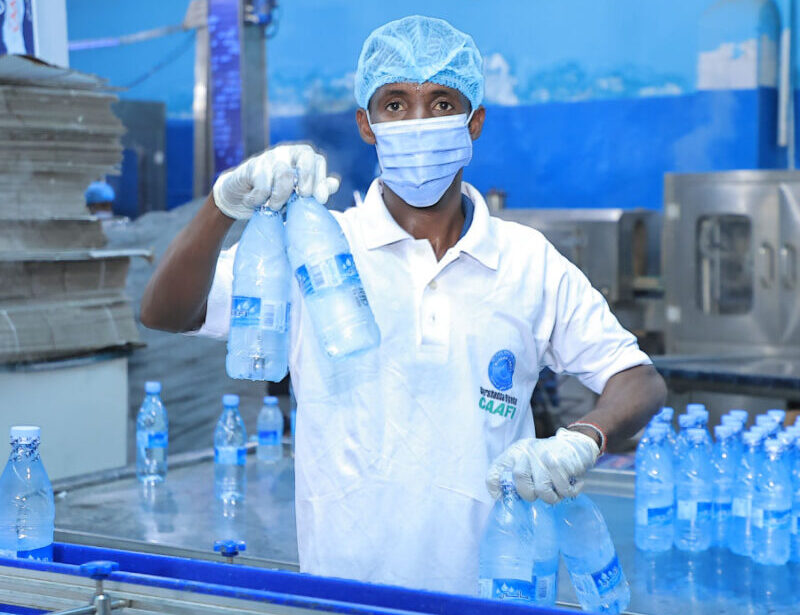
Shuraako has provided funding to bottled water company Afi Water Factory.
Investment opportunities in the Somali region
According to Bellish, solar energy is one of the region’s biggest investment opportunities. “Somalis pay more for electricity than anybody in the world,” he says. “They pay between 70 cents and one dollar per kilowatt hour, which is like 10 times what we pay in the United States.”
He also points to fishing as a promising sector. Somalia has the longest coastline in mainland Africa, but its waters remain underfished. Bellish attributes this to insecurity and fragmented governance, which have affected fishing licensing.
“There is an opportunity for companies to come in and to process fish, particularly tuna, onshore. Or even better, to catch it, flash freeze it, kind of sashimi grade, and export to East Asia and Europe,” he says. “We need to up our game in terms of the health and safety certification. We have some companies that have the technical ability to do this, but because the certification regimes aren’t there, they’re kind of stuck selling to these Omani cartels who are … slapping a Made in Oman sticker on it and then re-exporting at 10 or sometimes even 15x what the Somali companies are selling it for. And that gap, that 10 to 15x margin, sort of illustrates the potential in the fishing sector.”
Manufacturing items locally to replace foreign imports represents another investment option. “The country imports 90-something percent […] of the goods that are there,” Bellish notes.
One company already pursuing this is Al-Hayaat Personal Care, which Shuraako has backed. It manufactures and sells shampoos and laundry detergents in the Somaliland market, offering a lower-cost, locally manufactured alternative to imported products. Its founder launched the company after moving back from Canada.
For domestic manufacturing to really take off, Bellish says there needs to be regulatory reform in terms of industrial policy. “They have a regulatory system that is by traders and for traders,” he says. “And traders want the opposite from government that domestic manufacturers want.”
Challenges facing Somali entrepreneurs
Physical infrastructure and transport are among the biggest challenges facing entrepreneurs in Somalia, according to Bellish.
“There are so many checkpoints, there is so much security. It could take you three hours to go 10 kilometres in Mogadishu – without traffic, just checkpoints,” he explains. If the Shuraako team manages to complete two site visits in a day, they consider themselves lucky.
The financial infrastructure presents another hurdle. “There’s no interbank clearing,” Bellish notes. “For example, we bank with one bank in Somalia, and if our client banks with a different bank, he’s got to withdraw cash from his bank, put it in a bag, drive it across town to our bank, and deposit it into our account because the banks don’t do business with each other.”
“They started the National Payment System,” he adds. “The banks have started connecting to it, and hopefully soon this will change. But since we’ve been in Somalia, there’s been no interbank clearing.”