

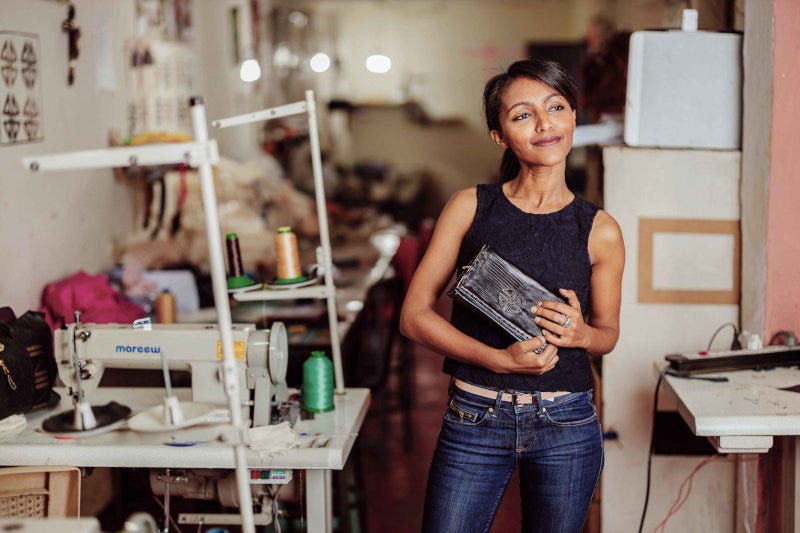
For many, the start of the year is a time to consider new opportunities. How we made it in Africa has compiled a list of eight potential business ideas in Africa to pursue in 2022, from exporting organic food products to tapping into growing global demand for African luxury brands. [Note: All these require further investigation; our intention is not to provide full business plans but merely to spark some initial thought.]
1. Formalisation and commercialisation of traditional food items
Throughout 2021, How we made it in Africa interviewed several entrepreneurs who have commercialised and formalised traditional food items.African breadfruit – locally known as ukwa in the Igbo language – is an edible fruit grown and eaten mainly in southeastern Nigeria. The seeds of the fruit are consumed for their high nutritional value. Phronesis Foods currently sells four ukwa products: dried ukwa, roasted ukwa snacks, ukwa poundo and ukwa flour.
“I had heard about fonio when I was a child because it was what our elders gave to widows to help them survive. It was a staple crop here in northern Ghana and not sold. It was only used during certain cultural activities,” explains co-founder Salma Abdulai. The company currently processes fonio into cereal and flour that are packaged and branded.
People would rely on baobab juice as a dietary supplement. However, baobab juice became less popular as people moved to processed foods. “My desire was to produce highly nutritious, affordable, functional foods targeted towards the mass market in Zimbabwe seeking a healthy alternative for a preventative diet,” she says.
2. Hotels for those on a budget
It’s a bit paradoxical considering the young age of the population and the wallet of the consumer. In some ways, it doesn’t make sense but it reflects the thinking of a lot of owners. They tend to be successful entrepreneurs or families involved in multiple sectors and they want a hotel positioned in the upper scale. They build a hotel not so much as an economically viable asset, but rather as a status asset,” he explains.
Kasada owns hotels operated under its strategic partner Accor’s brands, which include Ibis, Pullman, Novotel and Mövenpick. To date, the firm has invested in Côte d’Ivoire, Senegal, Cameroon and Namibia.
“Kasada sees a strong need for high-quality economy and mid-scale branded hotels across this enormous continent to accommodate a massive and young population, and vibrant entrepreneurs moving around these different cities. These segments are not only where you should have the most supply, but it’s also where there is the most demand. From a pure economics perspective, these types of hotels have an attractive return profile,” says Damiba, adding that hotels catering for the middle class should still be attractive and offer guests an enjoyable experience.
3. Export organic products from Africa
The global organic food market is expected to grow at 14.59% per annum to reach $368.94 billion by 2026, according to a report from Reportlinker.
Tapping into this market presents significant opportunities to agribusiness companies that can put in place the correct systems and support to serve this growing demand. In Africa, Marck van Esch sees specific potential for Uganda. “It is the fastest-growing sector in agriculture worldwide. Even during Covid-19, the market remained strong,” he says.“There are quite a few organic producers in West Africa but there, the season is about five to six months later,” the company’s founder Jaco le Roux explains.
4. Building materials
Several businesspeople and investors interviewed by How we made it in Africa during 2021 highlighted the potential in their respective countries’ building materials industry.
For example, businesspeople can focus on the big mansions and flats that are being built here in Lagos that require nice finishes, such as taps and door handles."
For instance, it has invested in Kisumu Concrete, which manufactures building products such as ready-mix concrete and concrete blocks. It is the largest player in western Kenya and enjoys little competition given the difficulty and cost of shipping building blocks from Nairobi or other locations.
It has also invested in Metro Plastics in Kenya, which produces PVC and PPR pipes as well as gutters and wastewater removal products. “These are not products that are going to make the front-page news but they are essential if you’re going to construct a building or collect rainwater, which is very important in this part of the world. These types of businesses that serve consistent local demand and are considered somewhat ‘safe’ from potential threats of imports are generally attractive to us. For example, it’s not cost-effective to ship pipes from China to Nairobi; they are light but take up a lot of space,” says David Owino, founding partner of Ascent.
5. Healthcare for the middle class
“One has a situation where there are expensive but good quality hospitals that cater for upper-income patients, and then we have the public sector facilities. However, there is what we call the missing middle, a shortage of facilities that offer good quality care to the middle class at a reasonable price.”
An entrepreneur that has tapped into this opportunity is Maxwel Okoth who started what was to become the RFH Healthcare group in a one-room apartment in 2011.Although there was a small number of other providers, RFH Healthcare was prominent with its equipment and quality of services, which grew the communities’ confidence in the brand. Taking care of patients during emergencies and being open 24 hours, further built trust in the business. RFH Healthcare also had the advantage of initially targeting outlying peri-urban areas that competitors avoided.
6. Using Ethiopia as a hub for the region
For many years, there has been a debate about which city is best placed to serve as a hub or gateway for Africa. Johannesburg, Nairobi and Accra have all been touted as potential contenders.“For one, the domestic market is sizeable but these players also plan to use Ethiopia as their base to serve the rest of Africa ... Having the Ethiopian Airlines network is a key factor; as the biggest and most successful airline in Africa, you can get almost anywhere on the continent from Addis Ababa.”
To explain how this would work, Owino gave the example of Ethiopian medical laboratory business ICL, in which his firm owns a stake. “The local market for medical diagnostics in Ethiopia is tiny but the opportunity beyond Ethiopia is huge, particularly if you look at Djibouti, South Sudan, Burundi, Congo, even the Central African Republic. Do any of these places have diagnostic services? These destinations are all only a few hours from Addis Ababa. There is an opportunity to partner with people in those markets to collect samples, fly them to Addis Ababa via Ethiopian Airlines, do the test and email the results to the doctor. The doctor can then give the correct diagnosis that same day or at the latest, the following day. It will be much shorter than sending samples to South Africa or India. Taking this model as an example, investing in Ethiopia means you have immediate access to 110 million people, and potentially 400 million people in the region. With a unique outlook like this, the market is for you to take.”
7. Tapping into demand for African luxury brands
Over the last few years, Laureen Kouassi-Olsson, an experienced financial services and private equity executive, has seen a huge increase in international awareness and interest in African designs and brands.The international market is changing and consumers are seeing an increased interest in transparency, sustainability and in African brands in general. Digitalisation allows African direct-to-consumer brands with a powerful story to reach a global audience they would not have been able to a few years ago,” she notes.